
Jitters + Nerves · ep. 148
Jitters + Nerves · ep. 148
Bunch of Butterflies
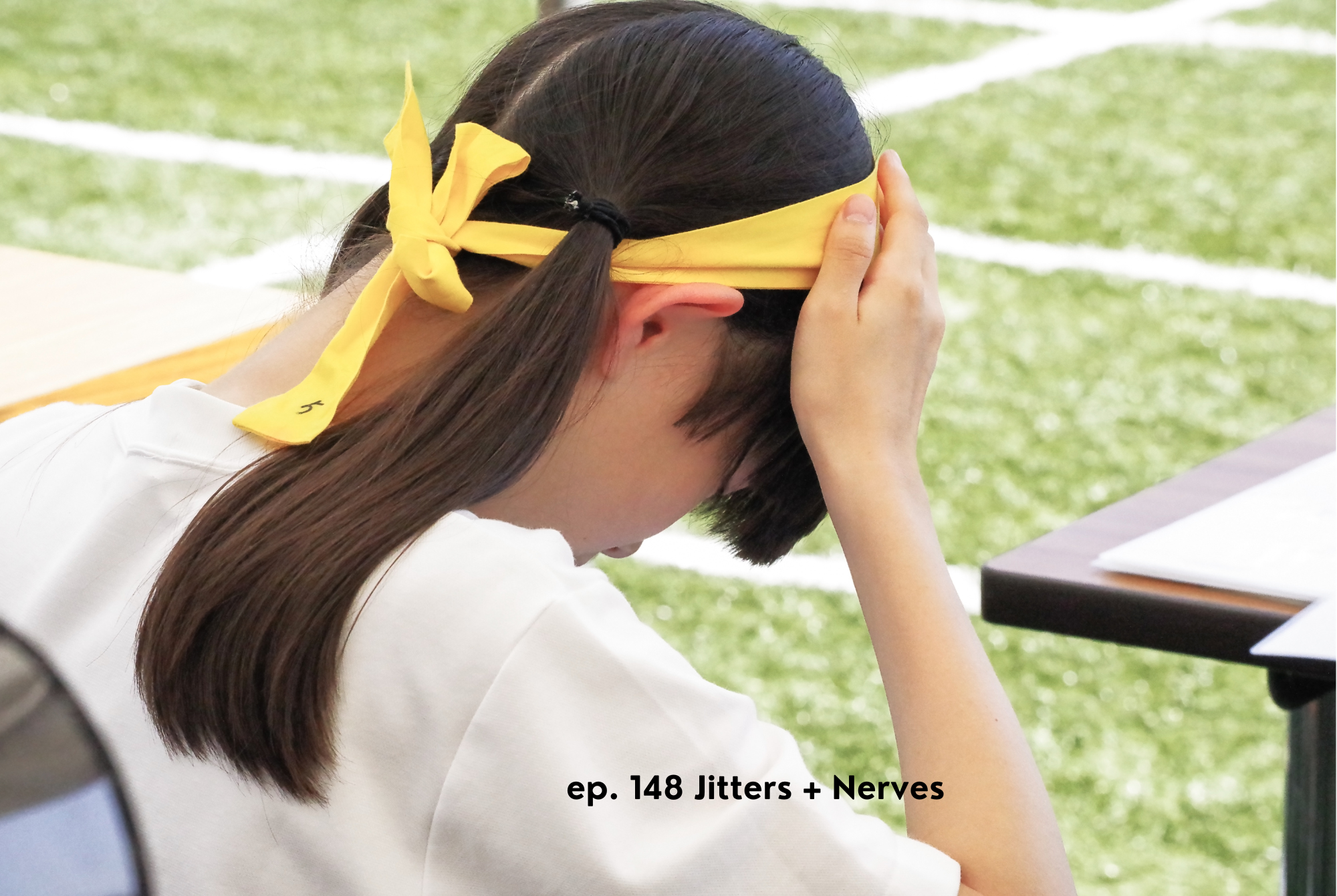
One of you gals suggested a topic about the jitters or nerves you get before taking a test, or competing in a sport, or singing on stage or starting something new.
And honestly I can relate. Growing up I would get “butterflies in my stomach” moments before singing a solo, or on the first day at a new school, or walking up to bat in softball, or waiting backstage for my cue to go on. Even now, I speak in public and on-camera all the time, and I still get nervous sometimes.
Performance Anxiety
This feeling actually has a name–it’s called performance anxiety. And it’s very common among people of all ages, so please know you’re not alone.
Performance anxiety can cause us to freeze like a deer in headlights when we’re supposed to be moving, or cause our minds to go blank when we need to remember important info, or make our voice and hands shake when we’re trying to be confident. The good news is, there are methods to handle performance anxiety. Let’s explore a few.
Name Emotions
If you’ve listened to this podcast before, you may have heard me talk about the importance of naming your emotions when dealing with struggles. That tool can also be helpful with performance anxiety. By naming your emotions, you’re helping yourself recognize how you’re feeling about what’s going on. You can even review the Wheel of Emotions to help you.
Let’s say you’re in class, about to take a unit test. Everyone seems stressed out, including you. As you pull out your supplies, you think to yourself, “What emotions am I feeling right now?” After a moment of reflection, you note that you feel nervous–even though you studied last night, you’re afraid you’ll forget something important. You also feel pressure to do well, so your grade stays high enough that you don’t get disqualified from your school’s swim team. By noticing and naming your emotions, you can recognize your feelings and validate yourself, “It makes sense that I feel this way. And worrying about it isn’t gonna make things better. So what can I do to help myself do my best?”
Naming how you feel can help you separate yourself from your emotions and the situation. That will give you a bit more space to observe and process it all so you can move on to effective solutions.
Breathing Exercises
Just breathe away the jitters? We talked about breathing in episode 005, how to breathe mindfully and deeply from your belly, in through your nose, out through your mouth. I know it sounds too simple to work, but breathing exercises can help you slow your racing heart and mind. Even SWAT teams use tactical breathing exercises for intensely stressful situations. And if it works for them, it could also be helpful for whatever’s causing your performance anxiety.
Try triangle breaths–breathe in for three counts, hold your breath for three, breathe out for three– like a triangle. Or square/box breaths–breathe in for four counts, hold your breath for four, breathe out for four, hold your breath for four. Repeat each exercise a few times, slowing your count with each round. Try the next time you compete and see how it helps!
Happy Thoughts
A few years ago I read a book by Shawn Achor called, “The Happiness Advantage,” and it changed how I thought about my thoughts. Shawn shared a few studies that illustrated how positive thinking can impact performance.
In one study, before students took a test, some of them were given candy or got to watch their favorite videos. They didn’t even get to eat the candy, but the positive boost of being gifted candy or watching a fun video before the test helped those students outperform the others. In another study, doctors who were given lollipops (again, didn’t eat them) were able to correctly diagnose patients twice as fast as other doctors without lollipops. And in another study, four-year-olds had to do a task, like build with blocks. Some kids were instructed to think of something happy before doing the task. Those kids finished the task faster and with fewer errors.
While I’m not suggesting that you constantly keep candy with you, I hope you see that thinking about something that makes you happy, that makes you smile, can shift your anxious thoughts to more positive ones and boost your performance.
Affirmations + Visualization
When we’re under pressure, our natural tendency is to think negative self-talk, “I’m not ready. I’m gonna mess up. Others are better at this than me.” Let’s be honest, do you think anyone does better because of it? Naw.
We talked about affirmations in episode 010 and visualization in episode 140, in case you need a refresher. In a nutshell, affirmations are positive, assertive statements; and visualization is imagining your success before you go for it. These can help you hype yourself up and get you in the right mindset.
I’ve seen videos of some of the best athletes doing affirmations and visualizations just before they compete. Olympic Gymnast and Gold Medalist Simone Biles at the 2024 Paris Olympics telling herself, “I got this.” And her teammate, Olympic Gold Medalist Suni Lee, reminding herself, “This is for me.” And when Olympic Runner and Medalist Sanya Richards-Ross had a negative thought about not winning in a past event, she’d tell herself, “Yeah that’s right, but I’m doing it today.”
Girls, your words have incredible power, especially the words you tell yourself. And if affirmations and visualization work for the most elite athletes on the biggest stages in the world, then they can also help you.
Shake It Off
If you feel shaky or tense before a presentation or competition, one way to release nervous energy–like Taylor said, shake it off! Shake your hands, arms, legs, feet, head, your whole body!
And if you’re in public and don’t want to draw attention to yourself, you can be subtle and roll your wrists under a desk and flick the negative energy away, roll your shoulders, flex and point your toes–anything to get your blood flowing. Or if you can step out for a few minutes, go on a quick power walk, do some jumping jacks, or jump up and down a few times to release endorphins. You’ll convert that nervous energy into positive energy before you perform.
One last thing–if your performance anxiety gets bigger than these tools can handle, cognitive behavioral therapy (CBT) from a licensed professional can be very effective.
Please remember that feeling jitters and nerves is common. Throughout your life you’ll have many experiences that give you butterflies. But what do I like to say? Practice makes … progress. The more often you help yourself get through a challenge using tools like these, the better you’ll get at it.
Jitters + Nerves Poster Printable
To help you remember all of this, I made a "Jitters + Nerves" poster for you to print out, personalize, and post on your wall where you’ll see it, remember it, practice it, and believe it -- that’s the important part.
(coming 5/17/26)
Resources
If you have a topic suggestion, I’d love to hear from you! Send an email (tweens get the OK from your parents) to [email protected] .
If you have social media already, follow me on Insta, TikTok, or YouTube @empowerfulgirls. I’m not encouraging or endorsing social media, but I’m on there to offer an unfiltered, uplifting alternative to what’s in your feed. Remember to get on the email list for the newsletter!
Also, if you enjoy listening to 10 for Teens + Tweens, I would truly appreciate you telling your friends about this podcast or leaving a review so others can find it and feel uplifted, too! Your support means the world to me!