
Sleep · ep. 149
Sleep · ep. 149
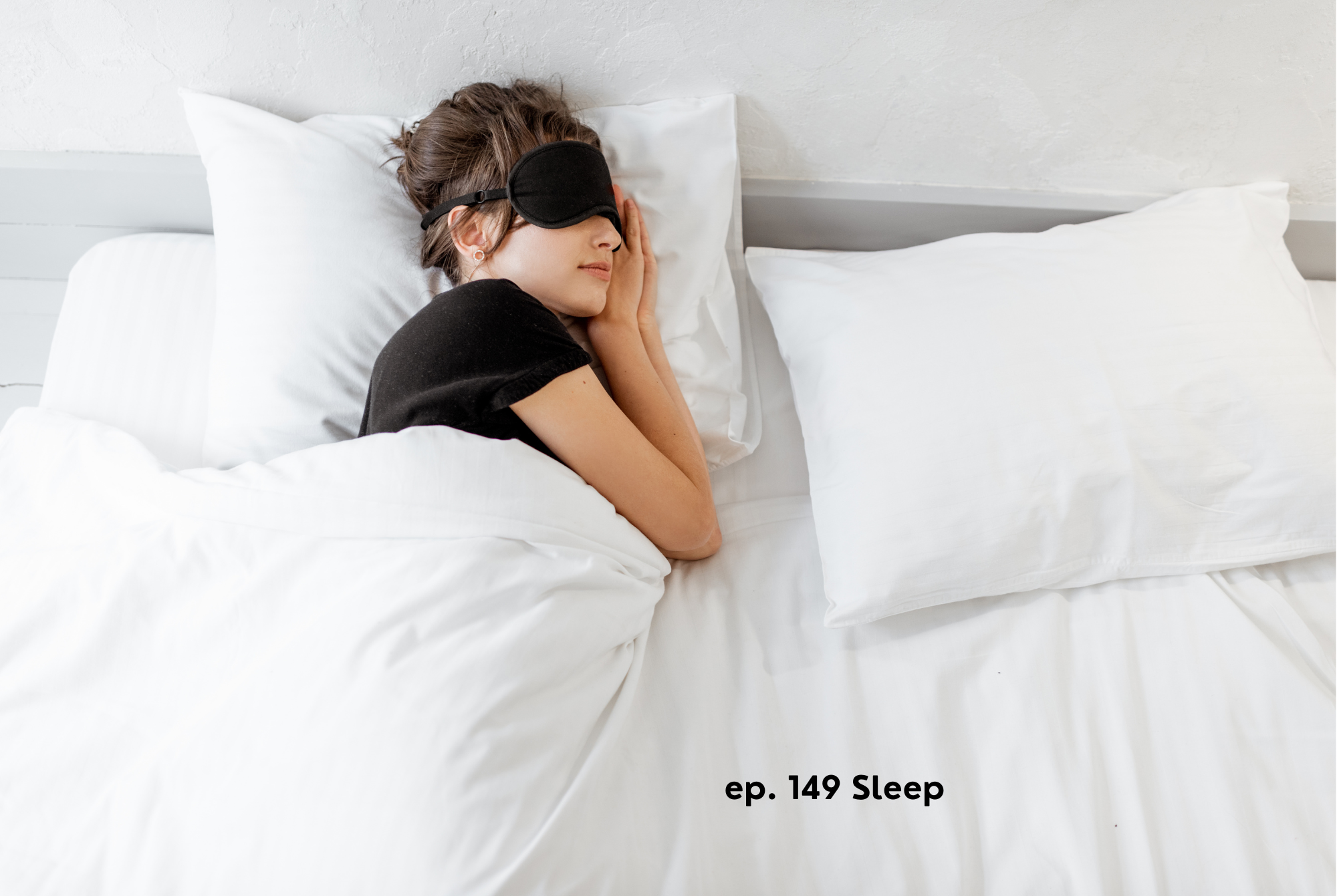
Sleep much?
Question for you–how’ve you been sleeping? I know it’s not a question you like being asked. But really. Do you tend to stay up late doing homework, hanging out with friends, or scrolling through your phone–even on school nights? Or do you have to get up early for school, practice, or work?
Maybe you get to bed at a decent time, but it takes a while for you to fall asleep, or you wake up during the night and have a hard time getting back to sleep. So you feel exhausted during the day, yawning all the time, even dozing off while you fight to stay awake.
Not gonna lie, I just had a rough week of sleep, and I am feeling it. Some of it was my own doing, like sabotaging myself by staying up late. And some of it was out of my control–my mind had trouble shutting off so I could fall asleep, or my body decided to wake up an hour+ earlier than I planned, and I couldn’t go back to bed. Maybe you can relate. So let’s talk about teen sleep struggles, why sleep is important, and what experts recommend.
How Much is Enough?
Johns Hopkins Medicine recommends teens get 9-10 hours of sleep every night. But the National Sleep Foundation’s annual Sleep In America Poll from 2024 showed 8 out of 10 American teens don’t get enough sleep–would you agree? Maybe you’re one of them? And it’s understandable why so many teens aren’t getting enough sleep–their school starts early, their after school activities and/or work last late into the evening, they’ve got loads of homework, and (yep, I’m gonna say it) they’re staying up late scrolling on their phones.
Light From Screens
Johns Hopkins Medicine says screens (phones, TV, etc.) make it harder for people to fall asleep because the screen’s light affects their body’s ability to release melatonin, a natural chemical that helps people feel tired. So then they stay up later, scrolling their phone for the algorithm to give them a dopamine boost, and they don’t get enough sleep.
Sleep + Mental Health
The National Sleep Foundation’s 2024 Sleep In America Poll also showed more than 1 out of 3 teens struggle with mental health. In their report, they recognized the connection between teen’s sleep and mental health–poor sleep habits can lead to poor mental health, and poor mental health can lead to poor sleep habits. But the reverse is also true–good sleep habits can lead to good mental health and vice versa.
Perform Cognitive Tasks Better
In a recent Cambridge study published in Cell Reports, researchers analyzed the sleep habits of three groups of adolescents. Group One slept an average of 7 hours 10 minutes, they typically went to bed the latest and woke up the earliest. Group Two slept an average of 7 hours 21 minutes, and their sleep habits were in the middle of the groups. And Group Three slept an average of 7 hours 25 minutes, they typically went to bed and woke up the earliest.
Researchers noticed that, when comparing groups’ cognitive tests, Group Three performed better at vocab, reading, problem solving, and focus than the other groups. It’s remarkable to me that the 15 minute-difference between the amount of sleep Group One got versus Group Three made a notable difference.
Less Lazy Lifestyle
A study by the University of Minnesota School of Public Health (published in the Journal of Physical Activity and Health) found that teens who got more sleep, and whose sleep aligned with their natural circadian rhythm (when your body normally wants to go to bed and wake up), those teens spent less time being lazy during the day, and more time doing physical activities–which is better for your health.
Sleep Recommendations
Earlier I shared Johns Hopkins Medicine recommends that teens get 9-10 hours of sleep. Recently many high schools across the US have been changing their start time to 8:30a or later to help promote better sleep for teens–including my kids’ school starting this year. But what can teens themselves do to reach that recommendation?
Stop Scrolling
Yep, here it comes again–stop scrolling before bed, like an hour before you want to be asleep, so the screen light doesn’t mess with your melatonin. Better yet, charge your phone in another room overnight so you aren’t tempted to pick it up and so you aren’t distracted by notifications.
Bedtime Routine
Instead, create a bedtime routine. Your parents likely did this for you when you were very young–a calming bath, a bedtime story, dim lights, etc. Our bodies like routines that cue us for what’s next, like getting ready for bed. So make your own bedtime routine to help yourself prepare to go to sleep.
Nap Early + Short
I understand you gals have busy schedules, activities and workloads that deplete your energy. If you need to take a nap, try to do it earlier in the afternoon and keep it short (less than half an hour). A longer nap or a nap in the evening might mess with your ability to fall asleep at your normal bedtime. And then you’ll get bored, so you’ll grab your phone, and then you’ll stay up too late scrolling, and the nap you thought would help you actually backfires.
Avoid Caffeine
Also, avoid caffeine in the afternoon and evening, as it might impact your ability to fall asleep at night. You might think it’ll be okay to chug an energy drink so you can stay up late to finish studying, but that could backfire when you try to go to bed. FWIW I’d avoid energy drinks altogether.
Weekend Schedule
Sometimes teens stay up late and sleep in late on the weekends. They think they can catch up on sleep they missed during the week. But it’s better to be consistent with your sleep schedule and habits. Think about it like this–when you travel and cross time zones, the time change messes with your sleep, right? So if you sleep in two hours later on the weekend, it can throw off your circadian rhythm and make it harder to go to bed at night. Best to just stick close to your normal schedule.
Sleep Helps
If you think you need your phone in your room so the alarm can wake you up in the morning, might I recommend a stand alone alarm clock. Yes, they’re still sold in stores. An alarm clock may seem old school, but they get the job done and they help you not reach for your phone in the middle of the night.
I mentioned before, giving yourself cues that it’s time for bed can help you fall asleep. Consider your five senses–sight, smell, taste, touch, and sound. For sight, you could dim your lights in your room and bathroom while you get ready for bed. For smell, you could use a lotion or pillow spray that’s relaxing. For taste, you know, brush your teeth every night, mint is refreshing. For touch, you could snuggle a fluffy pillow or soft blanket–feeling textures can be soothing for some. For sound, some of you have actually told me that this podcast helps you fall asleep at night. I hope it’s because my voice is calming and not because the podcast is boring. But on that note, listening to soft music, sounds, even bedtime podcasts can help you get to sleep.
If you’re like me, and your brain has a hard time closing down at night, here are some ideas that might help you. Some people like to sleep with a fan, both for the light breeze and for the ambient noise that helps drown out your thoughts or sounds from your house or outside. I actually sleep with like white noise, and that helps me both fall and stay asleep.
I hope you understand how important sleep actually is–it affects both our physical and mental health. So please practice better habits, remember that practice makes progress, and I hope you sleep well tonight.
Resources
If you have a topic suggestion, I’d love to hear from you! Send an email (tweens get the OK from your parents) to [email protected] .
If you have social media already, follow me on Insta, TikTok, or YouTube @empowerfulgirls. I’m not encouraging or endorsing social media, but I’m on there to offer an unfiltered, uplifting alternative to what’s in your feed. Remember to get on the email list for the newsletter!
Also, if you enjoy listening to 10 for Teens + Tweens, I would truly appreciate you telling your friends about this podcast or leaving a review so others can find it and feel uplifted, too! Your support means the world to me!