Play · ep. 150
Play · ep. 150
episode 150 + 1.5 million downloads!
Gals, we reached some major milestones! This is the 150th episode of the podcast AND we just passed 1.5 million downloads! I’m absolutely thrilled, ridiculously proud, and incredibly grateful. We did this together, and I sincerely appreciate you listening to the podcast and sharing it with others. Thank you!
What is Play?
All right, I want you to pause for a moment and think about the word “play.” What comes to mind when you hear it? What does “play” mean to you or look like for you? Also, when was the last time you allowed yourself to play? Maybe for some of you, it was recently. Others may be thinking, “Play is for little kids; I don’t do that anymore.” And some may be wishing they had more time to play.
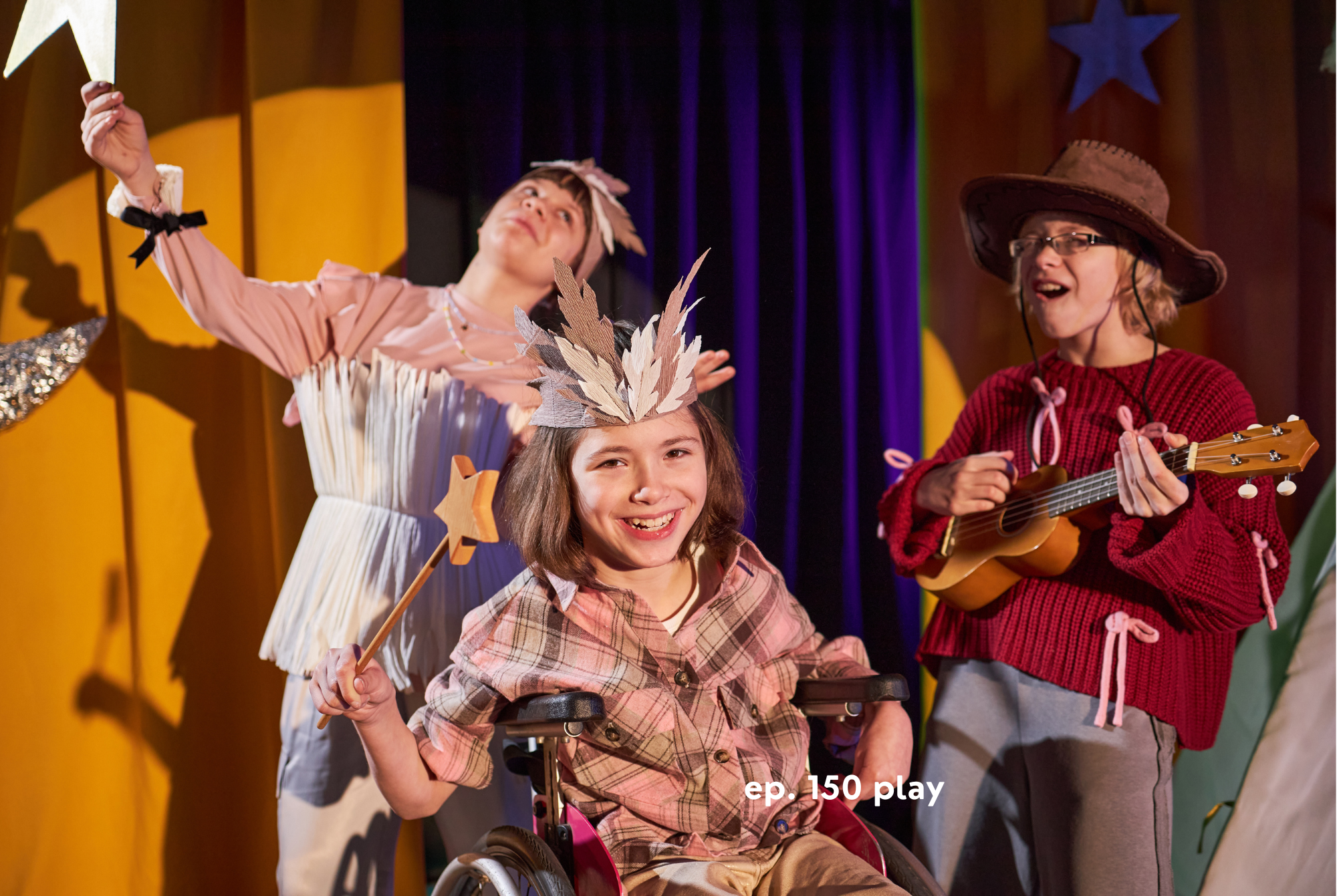
Play comes in many forms. Play can be physical and active, like playing outside. Play can be tangible, like creating and crafting with your hands. Play can be imaginative, like acting out scenes or writing stories or songs. Play can involve games–board games, card games, video games, phone games. Play can involve others or just yourself. Some forms of play are more engaging than others. But I’m afraid less of us are making time for play.
Less Play
A 2016 survey by Let’s Play, an initiative that encouraged daily movement, showed that 56 percent of parents of 8-year-olds said their children play every day, but only 26 percent of parents of 9-year-olds said their children play every day–less than half as much. Even if you’re older than that, what do you think changed over one year that made half as many kids not move and play as much?
And before you blame it on screens, remember that the survey was done ten years ago when fewer kids had access to smartphones and devices. So if the survey was redone today, I bet the percentage of 9-year-olds that play every day would be less than 26 percent, and older tweens and teens would be even lower than that.
But kids playing less isn’t just because of screens–though it’s definitely a factor. I think it’s also because tweens’ social lives evolve from playing together into hanging out together. The word “play” becomes cringe; instead they “chill” with friends. Kids also have less time to play because their lives are so much busier–societal expectations pressure families to fill up their schedules and leave hardly any time for play or free time. But everyone–kids and adults–need more play in their lives.
Forms of Play
Many of you might play a sport or an instrument. Those activities are organized and structured forms of play. When playing a sport, players follow the sport’s rules, they do what their coaches tell them, and they do the same drills or routines at each practice since repetition builds skill and muscle memory. Playing in a game or performing in a competition is less about play and more about precision, perfection, and proving yourself to coaches/referees/judges/officials.
Similarly, when playing an instrument, the student plays notes that someone else chose, they do what their teacher/director/conductor tells them, and they do the same warm ups and go through the same music when they practice or rehearse since repetition builds skill and muscle memory. Playing in a concert or a competition is less about play and more about precision, perfection, and proving yourself to teachers/directors/conductors/judges.
Now I’m not discouraging you from engaging in those activities; they definitely have their benefits. I’m trying to make a distinction between playing something versus play that uses your creativity, that’s unstructured, that’s not to meet others’ expectations, that’s just for the sake of play.
You may be thinking, I play games with friends, mostly online, which is fun. Again, I’m not telling you to not play games with friends. Just understand that kind of play is predesigned, it follows its own set of rules, it’s often based on chance, plus pushing controller buttons with your hands isn’t the same as hands-on play.
More Play Like
So what kind of play ARE you encouraging, Stephanie? I’m glad you asked.
I’m talking about play that allows you to imagine, to get curious, to explore, to be artistic, to make choices; play that’s unstructured or less-structured, that’s about enjoyment and the experience instead of the outcome (win/lose or success/fail); play that’s more about play than anything else. We need more of this kind of play. And of course I’ve got science to back it up.
Science Behind Play
A 2021 study by the International Journal of Environmental Research and Public Health showed that being creative makes you happier and improves your overall well-being.
A 2023 study shared by the National Institutes of Health showed a strong connection between creative activities and improved executive function (like being able to focus, plan, remember, multitask) in kids and teens.
And another 2023 study by Adobe and the National Alliance on Mental Illness (NAMI) showed that people ages 13-25 reported “greater confidence, identity development, and motivation, along with reduced stress and anxiety, when they had opportunities for creative expression.
Not only is play fun, it’s actually really good for you. We’ve got enough things in our lives that are rigid, draining, stressful, and serious. We need more things that are freeing, refilling, light, and silly. To put it simply, we need more play.
Examples of Play
So now here are some examples of that kind of play that I hope you’ll try.
Play improv games, like acting on the spot
Have your friends each sketch each other
Build a fort–out of blankets and pillows, cardboard, branches, etc.
Make up a dance to a popular song
Play with a pet
Create a short film with your friends
Learn a new craft just for fun
Bake cookies but switch up the recipe’s ingredients or flavors
Make cards or bracelets with friends
Go on a slow walk or hike and take time to notice new sounds and colors
Make up a dance with your friends
Play group games like Charades, Pictionary, Scattergories, Telestrations, etc.
Create a story by taking turns adding to the plot
Design a movie poster for a film that doesn’t exist
Make a fairy garden in your backyard
Create a nature scavenger hunt for your younger siblings or cousins
Draw up blueprints for an invention that solves a problem
I hope these suggestions helped you think of your own ideas for how to include more play into your everyday life. I know we’d all benefit from experiencing more play in all its forms. Because of how busy our lives are, we have to be intentional about making time for play to happen.
Resources
If you have a topic suggestion, I’d love to hear from you! Send an email (tweens get the OK from your parents) to [email protected] .
If you have social media already, follow me on Insta, TikTok, or YouTube @empowerfulgirls. I’m not encouraging or endorsing social media, but I’m on there to offer an unfiltered, uplifting alternative to what’s in your feed. Remember to get on the email list for the newsletter!
Also, if you enjoy listening to 10 for Teens + Tweens, I would truly appreciate you telling your friends about this podcast or leaving a review so others can find it and feel uplifted, too! Your support means the world to me!