
Girls + Sports • ep. 154
Girls + Sports • ep. 154
the debate
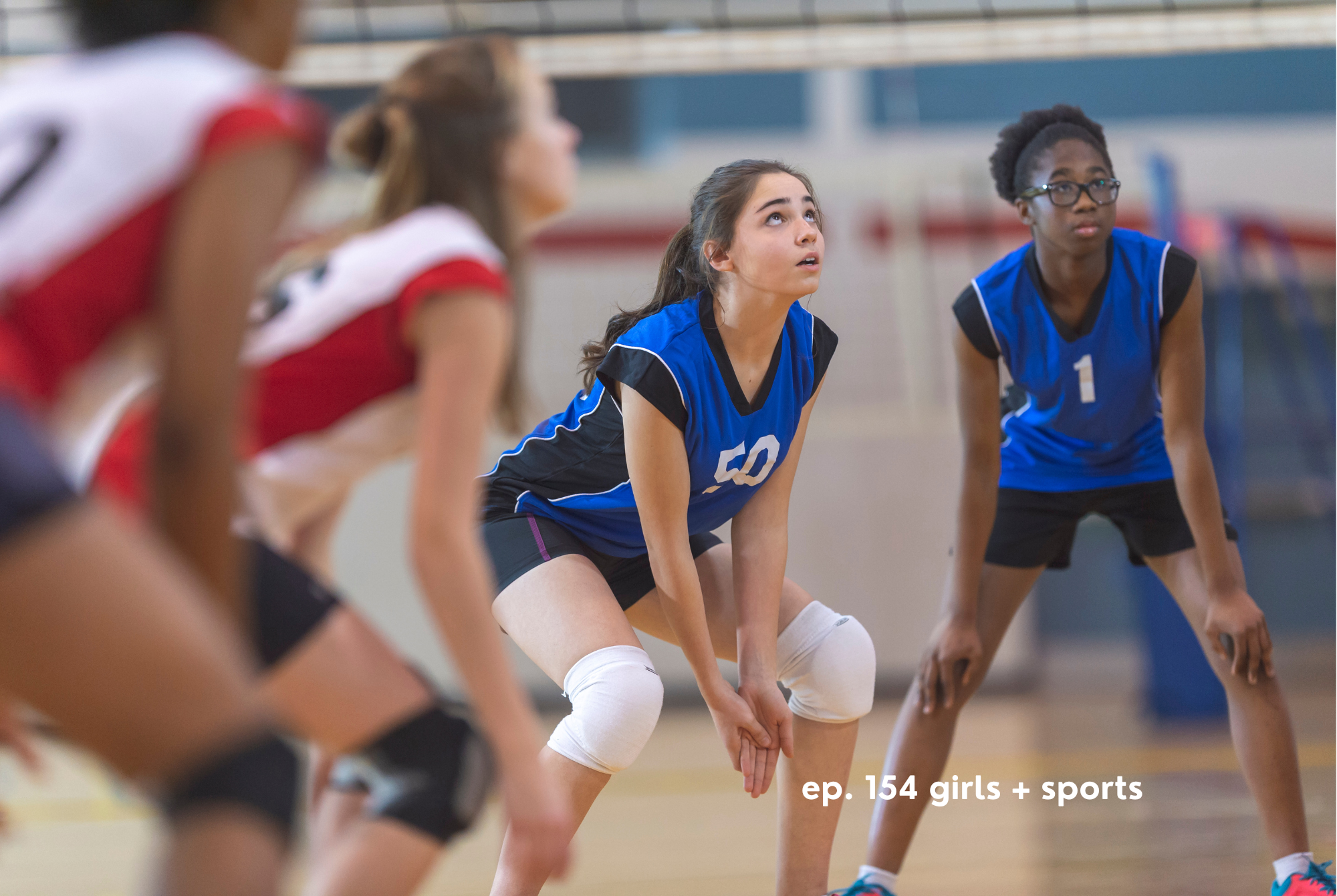
Recently here in the states, multiple ads involving women and sports have sparked some online debates. I won’t go too far into the details of these ads; instead, I want to focus on the broader picture, those media messages and why they matter. And I want to preface this by acknowledging that there are some places in the world where girls are not allowed to play sports. So if you’re in that boat, please know we see you.
history of girls + women in sports
First, some backstory. For you, girls and women playing sports may seem normal, no big deal. You may play a sport now or did when you were younger, your school could have both girls’ and boys’ sports teams, you might follow female athletes on social media, or you watch women’s sporting events. Girls and women playing sports is part of our society. But it hasn’t always been that way.
In the 1800s (in the US), girls and women playing sports was more for play and recreation, not competition. In fact, physical activity during their period was believed to be “hazardous.” Oh and remember “bicycle face,” where women were discouraged to ride bikes because some physicians said they would experience facial disfigurement? Nice try, guys.
But in the early 1900s, women started creating their own athletic clubs, more girls got involved in sports, and colleges started offering programs for girls. Then during World War II, since Major League Baseball was cancelled, the All-American Girls Baseball League was organized in 1943–the first professional women’s sports teams.
Over the next several decades, the interest and expansion of women’s sports grew. But there were still plenty of critics who didn’t respect girls and women in sports. Katherine Switzer got chased by a Boston Marathon official because girls weren’t allowed to race–but she resisted and finished anyway. Bobby Riggs challenged Billie Jean King to a “Battle of the Sexes” tennis match because he thought men were better at sports–long story short, he lost.
In 1972 Title IX was passed–a federal civil rights law which, in part, said government-funded colleges must offer girls sports teams, equipment, and places to play just like the boys had. In the 54 years since then, we’ve seen progress toward equality for female athletes. More than any other time in history, today there is more participation, visibility, support, recognition, and respect for girls and women in sports. But there’s more work to be done.
struggles of girls playing sports
According to the Women’s Sports Foundation, girls drop out of sports twice as much as boys by age 14. And Sport England reported 64 percent of girls quit sports all together by age 16 or 17. There are already fewer opportunities for girls to play sports, but what’s worse is many girls quit their sport because of body changes, stereotypes and judgement, loss of confidence, safety concerns, and not feeling valued.
benefits of girls playing sports
Which is really sad because there are incredible benefits to girls playing sports. A recent Women’s Sports Foundation report showed girls who play sports report 1.5 times higher levels of meaning and purpose compared to those who have never played. And mental health disorders are 1.5 to 2.5 times lower for girls who play sports vs. those who never played.
Sports can impact your future, too – and not just playing professionally. A survey by EY and espnW found that 94 percent of women who were senior business executives grew up playing sports, and over half played at university level. Clearly sports can lead to success.
ongoing problems of girls' + women's sports
Yet even if girls stayed in sports, that doesn’t solve the problem of people’s attitudes towards girls’ and women’s sports. They’re often considered less important, less impressive, less exciting compared to their men’s sports counterparts – which is not true.
lack of visibility
Let’s start with visibility. Per the media company Togethxr, in 1999 women’s sports received 8.7 percent of TV coverage. And despite their increasing popularity over the past 25 years, today women’s sports still get only 9.2 percent of TV coverage. Media networks should meet the demand with better visibility of women’s sports. It’s important for young girls and teenage athletes to watch examples of inspiring female athletes. As actress Geena Davis put it, “If she can see it, she can be it.”
sexism toward female athletes
There’s also sexism, which has gotten better but isn’t gone. Some reporters ask women in sports really dumb questions, ones they’d never ask men. Questions about a woman’s outfit, their dating life, when they’re going to have kids, about their body hair or weight gain, if they worry they look too muscular. What does any of that have to do with sports? I’ve also seen videos of average guys who were fully confident they could beat a female pro athlete at her sport, just because she’s a girl. Then the guys had to play against the women pros – who completely dominated and humbled those average guys.
disrespect for girls + women in sports
The worst problem to me is disrespect. I know we took the scenic route to get here, but the recent media messages illustrate the pervasive disrespect for girls and women in sports.
I’ve got two angles for this. First, too often, women in sports are a punchline. In an ad for golf clubs, a man shoves a female golfer to the ground just because she’s reaching for his golf clubs. In an AI video showing a real college football coach and a real seasoned sports reporter, the coach slaps the reporter and runs off celebrating. Too many people thought those videos were funny, that they were jokes, that people shouldn’t take it so seriously. But in reality, hurting women isn’t funny. Period. Those videos normalize that kind of behavior, which is problematic.
The other point I want to make about disrespect is girls and women in sports are often objectified. People focus on what her body looks like, not her athletic ability. Women in sports are criticized for looking too “manly.” Girls share pics from their game or competition on social media, and pervs leave them creepy comments.
A recent ad for an app featured a famous actress wearing very little while holding sporting equipment. In my opinion, that ad was lazy marketing–I’ve seen it done before: a celebrity larping as an athlete, and a company objectifying women’s bodies to sell something that has nothing to do with her body. And it diminishes the talent and accomplishments of actual women in sports. You girls deserve better than that messaging.
what actually matters
Whether you see that ad or another like it in the future, I want to make sure you girls know that how you look is not what matters. How you look while playing sports is not what matters. What others think of how you look, playing sports or not, does NOT matter. And I know it’s hard not to think about what other people think of your appearance. But your body does not exist for the visual approval of others. As Dr. Lindsay Kite and Dr. Lexie Kite of @beautyredefined put it, “You are capable of more than looking hot.”
When it comes to sports, what matters is how you feel playing sports–strong, energized, tenacious, connected, empowered, motivated, confident, proud, victorious. What matters is that you enjoy playing, that it helps you grow and get better, that it allows you to see what you’re capable of achieving. So the next time you practice or play, I want you to tune out what others think, quiet your negative self-talk, and chase those good feelings that come from playing sports.
Resources
If you have a topic suggestion, I’d love to hear from you! Send an email (tweens get the OK from your parents) to [email protected] .
If you have social media already, follow me on Insta, TikTok, or YouTube @empowerfulgirls. I’m not encouraging or endorsing social media, but I’m on there to offer an unfiltered, uplifting alternative to what’s in your feed. Remember to get on the email list for the newsletter!
Also, if you enjoy listening to 10 for Teens + Tweens, I would truly appreciate you telling your friends about this podcast or leaving a review so others can find it and feel uplifted, too! Your support means the world to me!